
What Keeps Indian CTOs and CIOs Up at Night: Ten Pressures and What Helps
What keeps Indian CTOs and CIOs up at night is rarely a server. It is a decision someone will judge later, usually after something has gone wrong.
I have sat in that chair, and two deadlines taught me most of what is in this post. In one, we had to get ready for the DPDP Act while our marketing depended heavily on user consent. In the other, we had to meet CERT-In compliance at very short notice. Neither was only a technology problem. Both landed on the technology head.
I think the ten pressures below are much the same in Mumbai, Bengaluru, Pune, Gurugram and Chennai. The flavour changes by city, and I say how near the end.
The 30 second version
- Most of these pressures are about money, people and accountability. The technology is the smaller part.
- DPDP and CERT-In are board topics now. If your marketing runs on consent, DPDP is a business problem first.
- The AI request and the old core system pull in opposite directions. Do not let the board set one timeline for both.
- Fix one pressure a quarter, not ten.
Table of Contents
The pattern behind what keeps Indian CTOs and CIOs up at night
I group the ten into four sets: systems and data, people, money, and risk and rules. For each one I say what it looks like and what I would do first. These are my opinions, not a survey.
Systems and data
1. The AI request arrives before the architecture is ready
The board reads about generative AI in the morning and asks by lunch why we are not doing it. Meanwhile the core system is ten or fifteen years old, and the person who understood it left long ago.
I would say yes to one narrow use case with a number attached, and no to a company-wide AI programme. Put the work of untangling the core into the same conversation, with its own budget line.
2. Technical debt that nobody budgets for
Every quick fix and “we will refactor later” is still sitting there. Releases slow down, and most of the team’s time goes to keeping the lights on.
Reserve a fixed share of every release for cleanup, and agree that number with the business before the quarter starts. Write down what is undocumented, because that list is your real risk register.
3. Data in silos that will not talk
Sales, finance, supply chain and customer care each hold their own copy of the truth. The business wants one view of the customer by next month.
Do not start with a data lake. Pick one domain, usually the customer, fix its quality and ownership, and let the other teams see the result.
People
4. Good engineers get poached
Global capability centres and funded startups can pay more than you can. I do not think you win this on salary alone.
Give people a hard problem and a visible path. And write the architecture down, so one resignation slows you down but does not stop you.
5. The tool is bought, the habit is not
You can license the best platform and still watch a business team go back to its Excel sheet. Culture beats tooling every time.
Pick one team that wants the change and make them the proof. A second team will ask for it without being told.
6. The decision nobody shares
Your CEO wants certainty, your team wants stability, and nobody knows what the next twelve months look like. When a vendor or platform call goes wrong, the name on it is yours.
I would write the decision on one page, with the assumptions that would make me change my mind. And I would find two or three peers outside the company who will talk straight, with no appraisal attached.
Money
7. Prove the return on every rupee
The CFO wants a number for every project. A demo and a vendor deck are not numbers.
Agree the baseline with the business owner before the project starts. If “better” is not defined in advance, you will argue about it at the review.
8. Cloud and SaaS bills that grow quietly
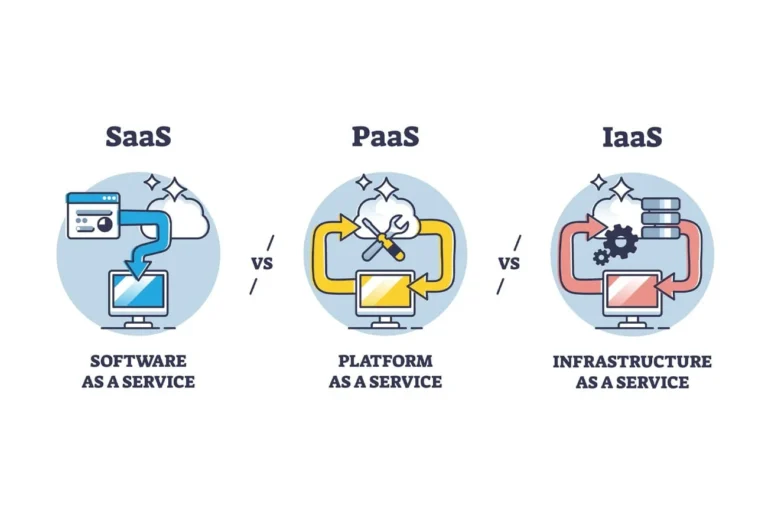
A lift and shift that looked cheap becomes a large monthly bill. Renewal time arrives, and the vendor knows how hard it is for you to leave.
Keep a calendar of renewal dates. Before signing anything new, ask what leaving would cost. If nobody can answer, that is the real price.
Risk and rules
9. The 2 am call
Ransomware, a compromised account, a vendor breach. The attacker has to be lucky once, and you have to be ready every day.
I would rehearse one bad day with the team: who isolates what, who rotates which secret, who talks to the board. A written plan that nobody has practised is a document, not a plan.
10. DPDP and CERT-In, usually on short notice
This is the one I know best, so here is the longer version.
When a business’s marketing runs on user consent, getting ready for the DPDP Act is not an IT job. Every campaign depends on a consent that someone captured, somewhere, in some form. Tech cannot fix that alone. Marketing has to say which campaigns rest on which consent, and technology has to show where those records live and how a withdrawal flows through every system.
CERT-In compliance came to us at very short notice. What I took from it is that a deadline like that finds whatever you never documented: which systems you run, who owns them, where the logs sit, who to call. I would build that inventory before buying any tool.
I am not a lawyer, and the exact obligations depend on your business. As I read it, the main DPDP compliance window runs to May 2027. Check the official pages at MeitY and CERT-In for the current rules, and ask your counsel before you act. I cover the Act in more detail in my DPDP post for CEOs.
Does it change by city?
The ten pressures stay the same. The weight changes. I have not worked in every city, so treat this as what I hear and read, not a survey.
- Mumbai: banks, insurers and large groups with old core systems, and regulators close by.
- Bengaluru and Hyderabad: the talent fight is sharper, because capability centres and startups sit next to each other.
- Pune and Chennai: factories and engineering firms, where plant systems and IT security have to meet.
- Delhi NCR: consumer scale, retail and e-commerce, with volume spikes.
I have no firm view on Kolkata, so I will not guess.
Where to start this quarter
| If this is your week | First move |
|---|---|
| The board wants AI | One use case, one baseline number |
| Releases keep slowing | Fixed cleanup share in every release |
| You lost a key engineer | Write the architecture down |
| A renewal is coming | Ask for the exit cost first |
| A compliance deadline lands | Inventory systems, logs and owners |
Frequently asked questions
What keeps Indian CTOs and CIOs up at night?
Mostly accountability. Old systems and technical debt, AI expectations from the board, talent leaving, rising cloud bills, cyber incidents, and compliance with DPDP and CERT-In rules.
Are CTO challenges in India different from other countries?
The core worries are the same everywhere. India adds its own mix: the DPDP Act, CERT-In requirements, strong competition from capability centres for engineers, and a large base of older systems in banks and big groups.
What does the DPDP Act mean for a CTO?
You have to know where personal data sits, how consent is recorded and withdrawn, and how fast you can respond when someone asks about their data. Marketing and technology have to work on it together.
What is CERT-In compliance?
CERT-In is India’s national agency for cyber incidents, under MeitY. Its rules cover things like reporting incidents and keeping logs. Check cert-in.org.in for the current requirements.
My takeaway
Pick the pressure you cannot explain to your board in two minutes, and fix that one first.



One Comment
Comments are closed.