Sleepless in the C-Suite: CISO Burnout and the Board’s Part in It
Sleeplessness at the top of technology is no longer a private cost. It is a business risk, and CISO burnout and the board sit at the centre of it.
I borrowed the title from a film about a sleepless man and a stranger who heard him on the radio. Most CTOs awake at 3 AM would settle for someone on the other end of the line. This post is about who is awake, what it costs the company, and what lets people sleep.
The 30 second version
- Sleeplessness among CTOs, CISOs and the people below them is a business risk, not only a wellbeing issue.
- It travels up to the CEO and the board, and down to the on-call engineer.
- Research on sleep loss points to worse and riskier decisions, and the first hours of an incident are all decisions.
- What helps is mostly preparation: a tested recovery plan, a named deputy, a rotation and written runbooks.
- On CISO burnout and the board, six questions help, and they are listed near the end.
Table of Contents
Two nights I still remember
The first night, the board asked what our recovery plan was if a cyber attack succeeded. The question was fair, and it did not have a one-line answer, so it came to bed with me.
The second night, cyber alerts kept coming while the system had to perform on a key event date. Sleep was not on offer.
Neither night had anything to do with new technology. Both came down to readiness, which is why I treat sleep as an operational matter.
Why the nights are longer now
Two things have grown together: how often something goes wrong, and how much it costs when it does. AI has added new places for things to go wrong, and regulators have written the response time into rules.
Three examples show how different the clocks are.
- India. CERT-In’s directions of April 2022 require a cyber incident to be reported within six hours of noticing it. I cover who else to notify in CERT-In incident reporting guidelines on Eidoran Insights.
- United States. Under the SEC’s Form 8-K Item 1.05, a listed company has four business days to disclose a material cyber incident after it determines the incident is material. The SEC’s announcement explains the rule.
- United Kingdom. The NCSC publishes a free Cyber Security Toolkit for Boards, written for board members and not for technologists.
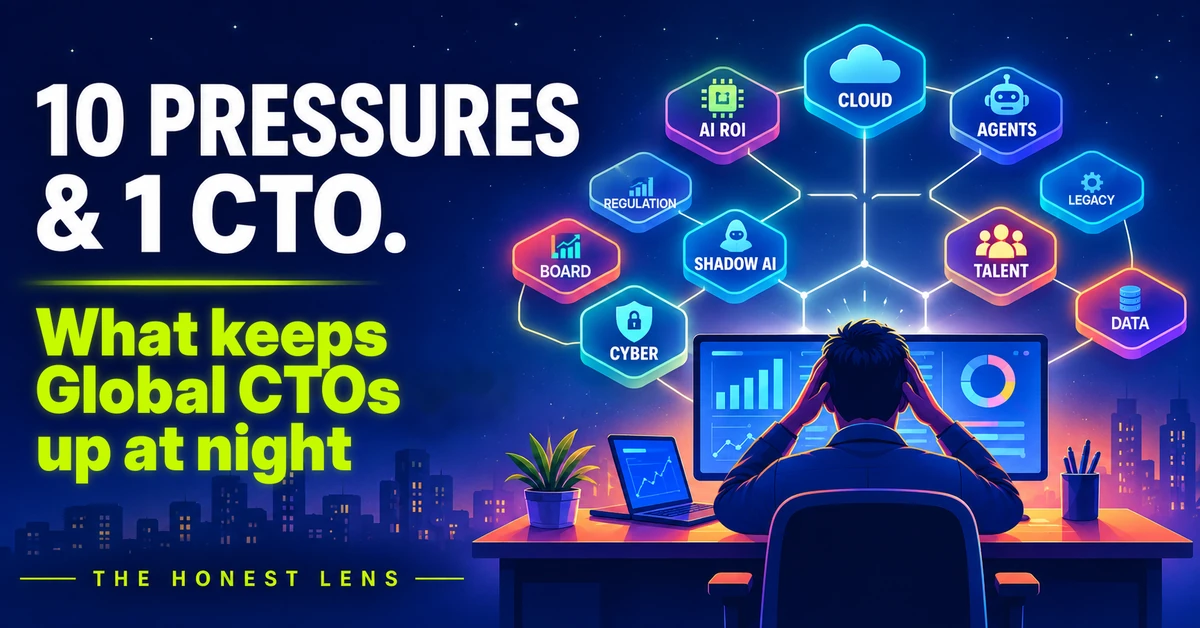
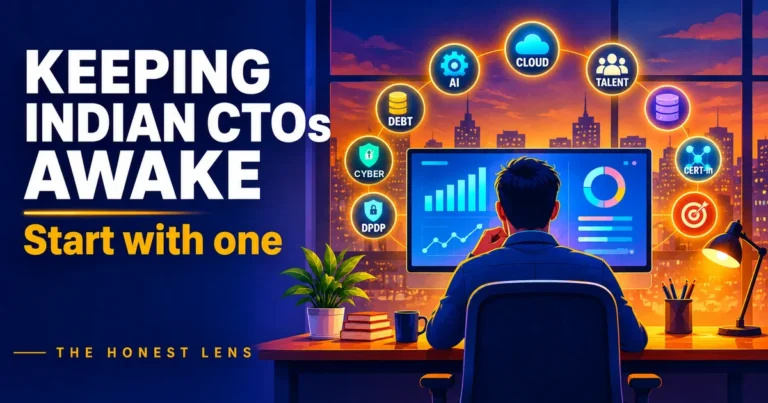
The India clock starts when you notice. The US clock starts when you decide it is material. Neither stops at night. For the full list of what keeps technology leaders up, I wrote what keeps CTOs up at night. This post is about the person, not the list.
Who is awake, and what keeps them there
The sleeplessness does not stay with one person. It runs up and down the org chart.
| Who | What keeps them awake |
|---|---|
| CTO or CISO | The 3 AM call, and being the name on the decision |
| On-call engineers | The pager, and alerts that never fully stop |
| CEO or MD | The regulator and the press on the same morning |
| The board | Whether anyone can say what happens next |
This is my reading of who carries what. It is not survey data.
On CISO burnout and the board, the link between the CTO and the CEO matters most. As I wrote in manager of managers, a CEO or MD has no single boss, because the whole board is the boss. That is why a sleepless CTO turns into a sleepless CEO quickly after an incident. The CEO has to answer a room, not a person.
Accountability without authority
Many security heads are held to account for outcomes they cannot fully control. They carry the answer for a breach, yet the budget, the vendor choices and the business priorities sit with others.
That gap is where a lot of the lost sleep comes from. It is also where CISO burnout and the board meet, because the board is the body that can close it. Two questions make it concrete. Does the CISO’s authority match the accountability they carry? And do the company’s directors and officers insurance and indemnity terms say anything about the CISO? I do not know the answer for your company, and the answer differs by country and by contract. Ask your counsel.
A tired incident lead is a risk
Here is the opinion I will defend. Sleep loss at the top is a control weakness, and almost nobody records it as one.
In the first hours of an incident, someone decides what to switch off and whom to tell. That someone is usually the most senior person awake, and often the most tired.
A tired incident lead is a risk, and it is not on anyone’s register.
Two pieces of peer-reviewed research sit behind this. A 2025 scoping review in Behavioral Sciences found that sleep deprivation commonly impairs decision-making, with many studies reporting riskier decisions, although results vary by task and by how long people were without sleep. A 2024 paper in Information and Computer Security looked at burnout and sleep quality in cybersecurity professionals. Its authors warn that unaddressed burnout may add to wellbeing and retention problems in the field.
I know of no study that measures a CTO’s tired decision during a live incident. So the link is my inference from these two bodies of research and from my own nights. Test it against yours.
Signs to watch, in yourself and your team
The WHO describes burn-out as an occupational phenomenon that comes from workplace stress that has not been managed well. It has three parts, set out in the WHO’s explanation:
- Exhaustion, a sense of being drained.
- Mental distance from the job, or a cynical feeling about it.
- A shrinking sense of being effective at work.
A CISO who has gone quiet in meetings, stopped raising risks, or says the job has stopped mattering may be showing the second sign. A good board member notices that before the resignation letter does.
What lets a CTO sleep
These are readiness tasks. Doing them eases CISO burnout and the board’s worry together, and better sleep follows.
Before the night
- Write the answer to the board’s question. A recovery plan on paper, with who decides and in what order.
- Test it. A tabletop exercise with the board in the room, at least once a year.
- Name a deputy with real authority. If only one person can run recovery, the company’s recovery depends on one person’s health and one person’s notice period. Investors test for exactly this, and Eidoran’s piece on key person risk shows how.
- Write the first-hour runbook. What gets isolated first, who is called, and who tells the regulator.
During the night
- Rotate the incident lead. Nobody leads a second night in a row.
- Hand over in writing at a fixed time. A tired person should not be passing on a plan from memory.
- Keep a decision log. What was decided, by whom and why, so tomorrow’s tired person does not rebuild it.
- Send the person who has been up longest home. Even when it is the CTO.
CISO burnout and the board: six questions to ask
This is the part to forward. Ask these before an attack does.
- If an attack succeeds tonight, who decides, and who covers for them tomorrow?
- When did we last rehearse this with the board in the room?
- How many hours of the first day does the plan assume one person is awake?
- Who tells the regulator, and by when?
- Does our CISO’s authority and budget match what we hold them accountable for, and what do our insurance and indemnity terms say about them?
- If the answer to any of these is bad news, who can the CISO tell without it counting against them?
For the AI-specific questions, my post on AI governance for Indian boards goes further.
If your CTO cannot sleep, check the plan before you check the CTO.
My takeaway
Count the nights. CISO burnout and the board are one conversation, not two. If the same person has been awake for the same reason more than once, the plan has a gap, and the plan is a board matter too.
I am not a doctor or a lawyer. If poor sleep goes on for weeks, speak to a doctor. For liability or insurance questions, speak to counsel.
Frequently asked questions
What are the signs of CISO burnout?
The WHO describes three: exhaustion, mental distance or cynicism about the job, and a falling sense of being effective. In a security head that often looks like going quiet in meetings and no longer raising risks.
Is CISO burnout a board issue?
Yes. CISO burnout and the board are linked because the board sets the appetite for risk, approves the budget and asks the questions. If the CISO carries all of it alone, burnout becomes a risk to the company’s response, which makes it a board matter.
Can a CISO be held personally liable for a breach?
It depends on the country, the contract, the role and the facts, so I cannot give you a general answer, and this is not legal advice. What a board can do is ask counsel whether the company’s directors and officers cover and indemnity terms reach the CISO, and settle that before an incident.
Does sleep loss affect incident response?
Research on sleep deprivation points to impaired and riskier decisions, though results vary. I know of no study on CTOs in live incidents, so treat it as a risk to manage, not a proven figure.
Related reading
Last reviewed: 23 November 2026.