My 7 kg backpack packing list for solo travel covers 18 days across four countries: Azerbaijan, Georgia, Armenia and Turkey. Everything went into a 40 litre backpack, with a 2 kg foldable day bag for day trips. I travelled alone from 22 September to 9 October 2026, starting in Baku and flying home from Istanbul.
I worked from a checklist with a “Packed” column. This post is that checklist, grouped by category. Some items reflect my route, so a section near the end shows what to change for your own destination. The route and costs are in my 18-day itinerary.
Table of Contents
The bag and why I went cabin-only
| Item | Size | Weight |
|---|---|---|
| Main backpack | 40 litres | about 7 kg |
| Foldable day backpack | 15 to 20 litres | about 2 kg |
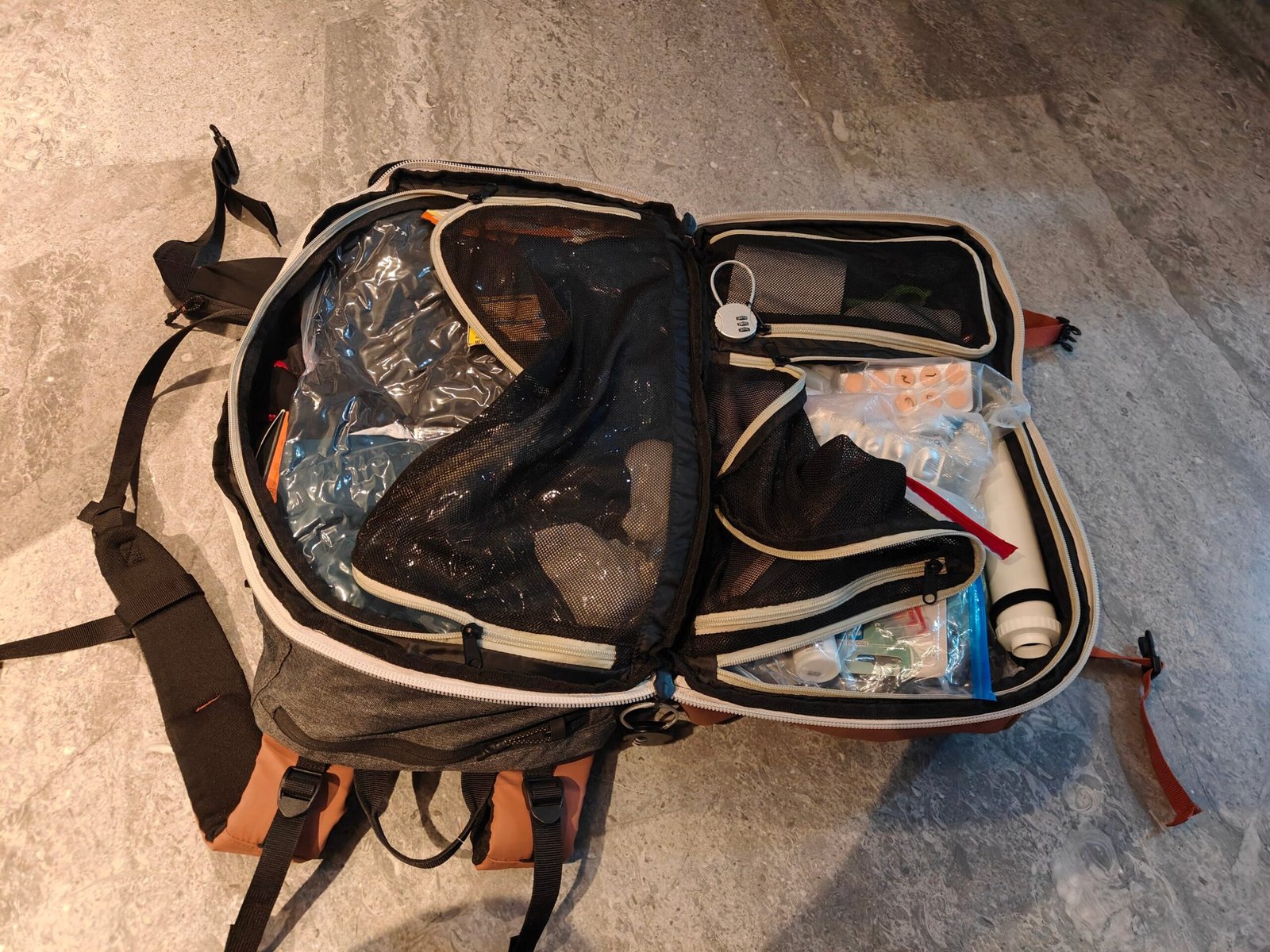
The trip had a night train, a night bus and several minibus rides, so I wanted one bag that never left my back. As I understand it, airlines usually allow a cabin backpack of up to 10 kg, and some allow only 7 or 8, so 7 kg fits almost anywhere. Check the cabin limit of every airline on your route before you fly.
Quick-dry clothes and vacuum bags with a pump made the weight possible. I washed a small load by hand in the sink with dry washing powder.
Clothing and weather
Pack for the coldest point of your trip, not the average day. Mine was the Cappadocia balloon ride: 6 degrees on the ground and 2 to 3 degrees at about 800 metres. I wore two layers on my legs and three on top. My dates were 22 September to 9 October, and the route also included Lake Sevan at 1,900 metres.
The counts below are what went in the bag. On travel days I wore one more T-shirt, one more pair of trousers, and one more of each underwear and socks, plus the wind cheater.
Tops and layers
- 5 quick-dry T-shirts
- 1 long-sleeve layer
- 2 light fleeces
- 1 wind cheater, worn while travelling
- 1 packable rain shell
Bottoms and basics
- 2 trousers
- 2 shorts
- 5 underwear
- 5 pairs of socks
- 1 swimwear
- 1 cap
Footwear
- Walking shoes, already broken in
- Light slip-ons for hostels and evenings
Towels
- 1 quick-dry travel towel
- 1 hand towel
Documents and papers
I printed almost every booking and kept two copies of my passport page, one in each bag.
Identity and visas
- Current passport, plus a photocopy kept separately
- Old passport holding my US visa. The Georgian officer asked to see it, and I used it for my Turkey e-visa as well
- Printed Azerbaijan, Armenia and Turkey e-visas
Flight tickets (5 legs, all printed)
- Mumbai to Baku
- Baku to Tbilisi
- Tbilisi to Istanbul
- Istanbul to Kayseri (ASR)
- Istanbul to Mumbai
Trains, buses and hotels
- Printed Tbilisi to Yerevan train ticket
- Printed bus tickets: the Yerevan to Tbilisi minibus and Cappadocia to Istanbul with Kamil Koç
- Printed confirmations for all 5 hotels
Insurance, contacts and a pen
- Printed travel insurance. At the Georgian land border the officer asked for it, along with my visas, stay reservation and flight ticket
- Copy of my prescription
- Emergency contacts written on paper
- A pen and a small diary
Visa rules change, so check each country’s official site before you book. My notes on what a US visa opens up for Indian passport holders are here.
Electronics
- Phone and charger
- A spare phone, Wi-Fi capable, kept switched off in the day pack (the full setup is in my money-protection post)
- 10,000 mAh power bank with its cable
- Universal travel adapter covering Type C and F
- Wired and wireless earphones
- Offline maps and downloaded routes on both phones
Toiletries and health basics
Wash and care
- Toothbrush and toothpaste
- Soap, shampoo and conditioner in travel-size bottles
- Deodorant
- Lip balm
- A few disposable razors
Small essentials
- Travel-size sunscreen
- Hand sanitizer
- A spare toilet roll
- A few safety pins
- Spare spectacles
Toilets are paid almost everywhere in Georgia, Armenia and Turkey, and the private ones want cash.
Medicines
Most of this is over the counter. Confirm with your doctor before you go, and check each country’s rules on carrying medicines. Keep everything in its original packaging with the labels visible, and carry a copy of your prescription.
Stomach and hydration
- Antacid tablets
- Loperamide for diarrhoea
- ORS sachets
I used ORS for about three days on this trip. Cheese and dairy are in almost every meal across the region, which is a lot for a sensitive stomach.
Pain, cold and allergy
- Paracetamol
- Cetirizine or another antihistamine
- Cold and flu tablets with throat lozenges
Mountain roads
- Motion sickness tablets for Kazbegi, Tatev and Ananuri
Cuts, blisters and strains
- Antiseptic cream or spray
- Adhesive bandages and band-aid strips
- Crepe bandage
- Knee support bandage
- Kinesiology tape
The route has plenty of steps. Khndzoresk has about 400 each way, and Uçhisar Castle has 250 to 300. My Tatev day trip post covers the longest day.
Prescriptions
- My prescription medicines
Laundry and packing helpers
- Detergent soap powder in travel-size bottles
- Vacuum bags and a hand pump
- A few Ziplock pouches
- Clothes clips (I never used these, see below)
Water and tea
- Refillable water bottle
- 20 Lipton premix tea sachets
Baku tap water is not safe to drink. Armenian and Georgian tap water is fine, and the old city of Yerevan has drinking fountains with spring water that runs all day.
Hostel and day-trip gear
Nine of my nights were in hostels, so a few items earned their place.
- Combination padlock for hostel lockers
- Luggage chain and three number locks for the night train and night bus
- Foldable 15 to 20 litre day pack for tours and day trips
On the Tbilisi to Yerevan night train I locked my bag with the luggage chain. More in my night train post.
Money and safety
The money setup has its own post, How I Protected My Money Abroad. The short version:
- US dollar cash, split across a day bag, a hip pouch and a body pouch
- Cards kept physically separate
- Card issuer helpline numbers saved offline
- Bolt and Yandex ride-hailing apps installed
- Phone IMEI noted down separately
- Find My Phone enabled and tested at home
- Cloud backup of photos and documents switched on
How to adjust this list for your destination
My route was cold at altitude, mostly card-friendly and visa-heavy. Yours may differ. Check these before you copy the list.
| Check | What I did on this trip |
|---|---|
| Coldest and hottest point | Packed layers for 2 to 3 degrees. For a hot, humid trip, swap the fleeces for another quick-dry shirt |
| Plug type | One universal adapter for Type C and F. Look up the plug type of every country |
| Dress code | Packed trousers and shorts. Religious sites in many countries ask for covered knees and shoulders, so check before you go |
| Tap water | Baku no, Armenia and Georgia yes, Turkey bottled. Check each country, and carry a refillable bottle |
| Toilets | Paid in Georgia, Armenia and Turkey, so keep small change |
| Entry papers | Printed e-visas, bookings and insurance. Rules differ by passport and country |
| Medicines | Confirm with your doctor and check each country’s rules on carrying them |
| Cabin limit | I kept the bag at about 7 kg because some airlines allow only 7 or 8. Confirm the limit for every airline on your route |
What I would change
Packed and never used
- Clothes clips
Missed on the trip
- A travel-size nail cutter
- Scissors, which are not allowed in cabin baggage. If you need them, travel with a checked bag
Frequently asked questions
Can you travel solo with only a 7 kg backpack?
Yes. I did 18 days across four countries with a 40 litre backpack of about 7 kg plus a 2 kg foldable day bag. Quick-dry clothes, sink laundry, vacuum bags and a pump made it work.
What goes into a carry-on backpack packing list for 2 to 3 weeks?
Five of each basic (T-shirts, underwear, socks), two bottoms, two light layers, a rain shell, one pair of walking shoes and one light pair, a small medicine kit, printed papers and a spare phone. The full list is above.
How do I keep a backpack under 7 kg?
Wear a full set of clothes and your wind cheater on travel days, use vacuum bags, wash small loads in the sink, and carry travel-size toiletries. I also kept a foldable day bag for tours so the main bag stayed packed.
Do I need a power adapter?
Check the plug type of each country. I carried one universal adapter covering Type C and F, plus a 10,000 mAh power bank.
Is tap water safe when travelling?
It depends on the country and sometimes the city. On my route: Baku no, Armenia yes, Georgia yes, and I bought bottled water in Turkey. I carried a refillable bottle.
What papers should I print?
Visas, every ticket, hotel confirmations and travel insurance. The Georgian officer at the land border asked to see my insurance, visas, stay reservation and flight ticket.
Related reading
- Azerbaijan, Georgia, Armenia and Turkey in 18 Days: A Solo Itinerary
- The Spare Phone and the ₹5,000 Card: How I Protected My Money Abroad
- Yerevan to Tatev: Khndzoresk, Wings of Tatev and the 3,000-Dram Car That Saved My Knees
- Cappadocia Balloon Ride: Why I Paid €110 in Soğanlı, Not €250 in Göreme
- Tbilisi to Yerevan Night Train
- Istanbulkart or Credit Card Tap? The Maths From My Trip