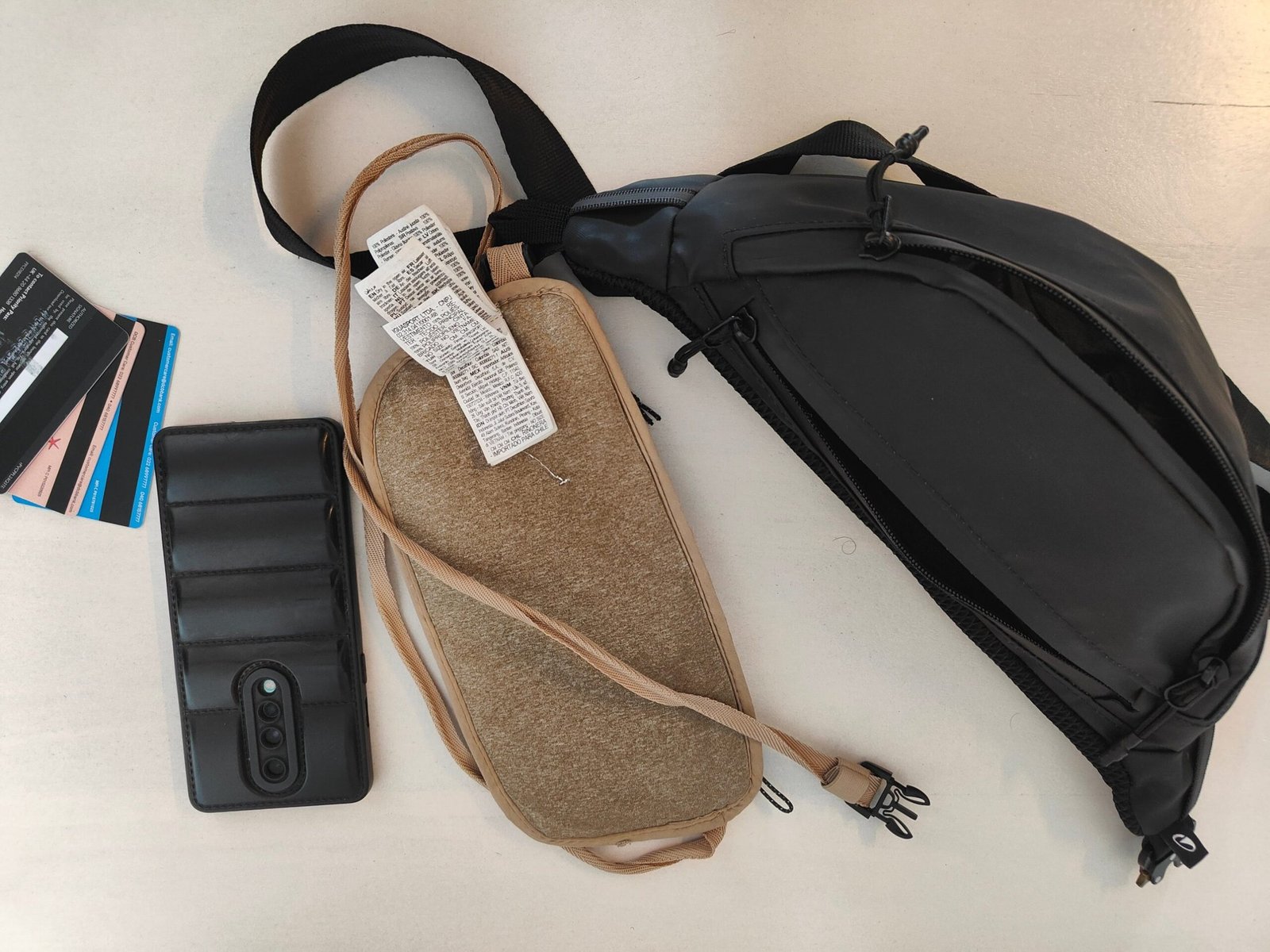

To protect your money abroad, I used a simple rule on my 18-day solo trip: never carry more at risk than I could afford to lose in one place. That meant four cards including a ₹5,000-limit credit card for every tap, cash split across three pouches and a spare phone that stayed switched off in my day pack.
I wrote about the loss side of this in my post on what to do after losing a phone in India, and in my book BE CYBER SMART. This post is the travel version. It is part of my notes from the route through Azerbaijan, Georgia, Armenia and Turkey.
Contents
Protect your money abroad: the four-card system
| Card | Purpose | Maximum exposure |
|---|---|---|
| International Credit card with ₹5,000 limit issued by Indian Bank | All taps and small purchases | ₹5,000 |
| International Debit card of account with ₹25,000 issued by Indian Bank | Held a small float | ₹25,000 |
| Normal International credit card issued by Indian Bank | Big expenses such as hotels and flights | Its full limit, so it stayed in the safest bag |
| Normal debit card linked to my regular account | Spare, kept in a different bag | Linked to my main account |
The small card did the risky work. Taps and small shops are where a card is used most often and by the most strangers. If that card was compromised, the most anyone could take was ₹5,000. When the balance ran low, I moved money in from my main account.
Why tapping a low-limit card makes sense
Tap fees also add up. In Baku each tap added about ₹12, so a ₹36 ride became ₹48. I compare ride costs and card fees in my Istanbulkart versus credit card post.
Keep cards and cash in different places
I kept the cards in different places: the big bag, the small bag, a hip pouch and a body pouch. If one bag went missing, I would still have a card in another.
I had total $650 which was split across in wallet inside the day bag, the waist pouch and the body pouch, so I never had all of it in one place.
The spare phone
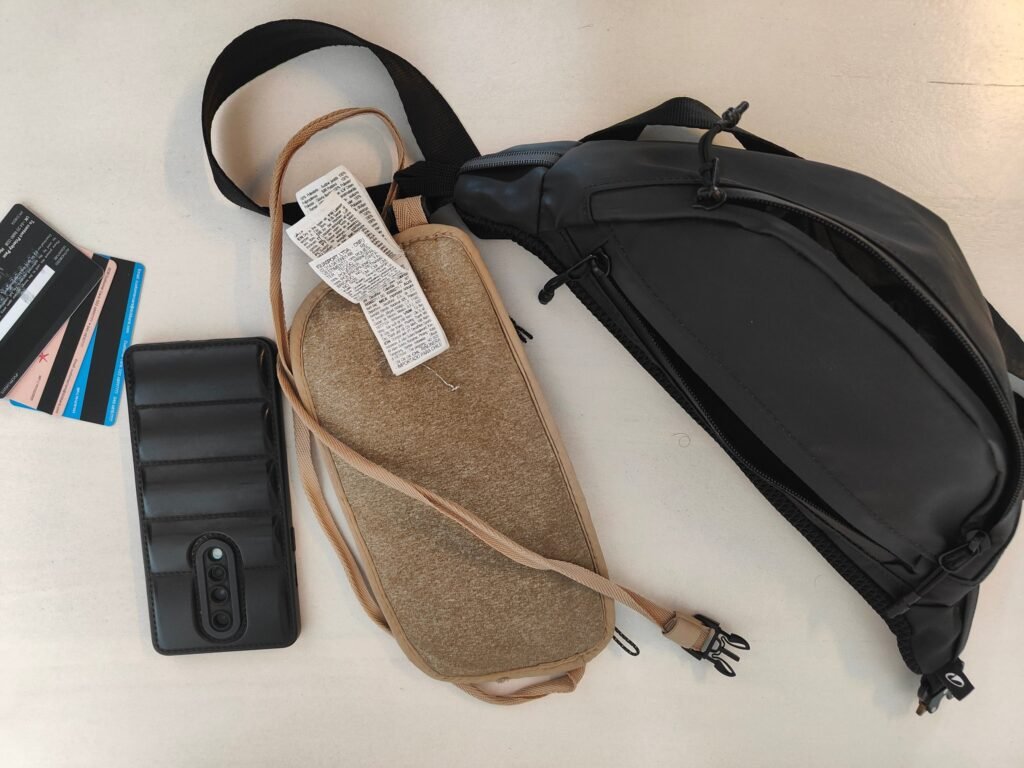
I carried a second phone, always switched off, in my day pack. It was logged into Google with a few key apps like Google Drive, Gmail and Google Photo. If my main phone, which holds my SIM and Google account, were lost, I could use the spare to find, lock or wipe it. Also, I can access my documents in Google Drive and Photos.
I set both phones up to do this for each other before I left. Test the setup at home first, so you know it works.
Account recovery and OTPs
- My wife’s and my son’s email IDs were set as Google recovery contacts
- Two-step verification stayed on
- I kept Airtel international roaming, 30 GB for a month, on my own number so bank OTPs and calls kept working
The roaming pack matters because many Indian bank OTPs go only to your registered number. A SIM PIN also stops a stolen SIM from receiving them, which I explain in my guide to the SIM card lock. A local SIM alone would not have received them.
Documents and locks
- Printed bookings and also all in Google Drive (with offline copy in drive)
- Two copies of passport details with the visa, one in each bag
- My old passport with the US visa, carried as a backup
- Three number locks and a luggage chain
Checklist to copy
Before you go
- Get a low-limit credit card for taps and small purchases
- Set up recovery contacts and two-step verification
- Install and test find, lock on both phones
- Activate international roaming for OTPs
While you travel
- Split cards and cash across several bags and pouches
- Keep the spare phone switched off in your day pack. You immediately need in case you want to track your lost phone.
- Use number locks and a chain at night or when you are not with your luggage.
- Top up the small card only when it runs low
FAQ
How do I protect my money while travelling abroad?
Limit what each card can lose, split cash and cards across bags, and carry a spare phone with recovery set up.
Why carry a spare phone when travelling?
If your main phone is lost or stolen, a spare logged into your Google account can help you find, lock or wipe it. Also you can access your email and travel documents.
Do I need international roaming for bank OTPs?
If your bank sends OTPs only to your Indian number, yes. I used Airtel roaming at 30 GB for a month. But you can just have roaming on for SMS. There are many other packs available.
How much cash did you carry?
About $650 in total, divided between three places on my body pouch, waist pouch and in my wallet.

Pingback: What to Do If You Lose Your Phone in India | The Honest Lens
Pingback: SIM Card Lock: Set a SIM PIN to Stop Phone Fraud
Pingback: Istanbulkart vs Credit Card: The Maths From My Trip
Pingback: Azerbaijan Georgia Armenia Itinerary: 18 Days, Real Costs