
This Azerbaijan Georgia Armenia itinerary, with Turkey added at the end, is the exact route of my first backpacking trip. I travelled alone for 18 days, from 22 September to 9 October 2026, starting in Baku and flying home from Istanbul. Everything I carried fit into a 40 litre backpack of 7 kg and a foldable day backpack of 2 kg.
I recorded these notes on my phone in hostels, hotels, bus stands and airport lounges. The prices, rates and rules below are what I saw in September and October 2026, and they may have changed since. I have left out surnames and trimmed some personal details to protect the people I met.
Quick Navigation
The route at a glance
Nine of the nights were in hostels, five in hotels, and two on a night train and a night bus. Here is the whole trip in one table.
| Dates | Where | Where I slept |
|---|---|---|
| 22 to 25 Sep | Baku | Alara Inn hostel, 3 nights |
| 25 to 26 Sep | Baku to Tbilisi to Yerevan | On the train |
| 26 to 29 Sep | Yerevan | Areva Hostel & Apartment, 3 nights |
| 29 Sep to 2 Oct | Tbilisi | Fabrika Hostel, 3 nights |
| 2 to 3 Oct | Istanbul (Pendik) | Kervan Hotel near SAW, 1 night |
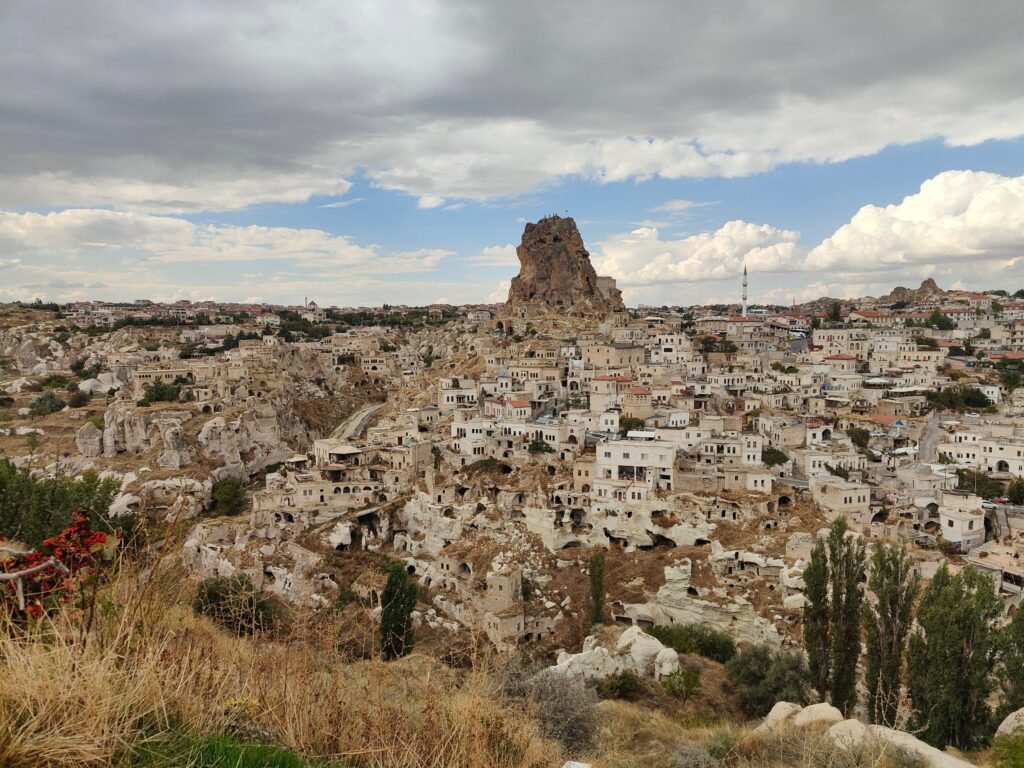
| 3 to 5 Oct | Cappadocia (Uçhisar) | Tuğhan Stone House, 2 nights |
| 5 to 6 Oct | Cappadocia to Istanbul | On the bus |
| 6 to 8 Oct | Istanbul | Hotel Fuar near Yenikapı, 2 nights |
| 8 to 9 Oct | Istanbul to Mumbai | In Flight |
Which order to visit the countries
Started in Azerbaijan and move west. I flew from Baku to Tbilisi because the land route looked hard in my research, and I did not try it myself. What I found was open land border near Sheki, a stay in Sheki, local taxis or vans and a walk across, so about two days in all. On the Georgian side you may have to walk four or five kilometres to find a decent ride, because nobody crosses back into Azerbaijan that way. It is a one way border with no public transport, and the train is not open to foreigners.
Flights from Georgia back to Azerbaijan cost far more than the other direction, which is why I would always go Azerbaijan first and Georgia after. Check the current border status before you plan around any of this.
Baku, 22 to 25 September
I landed around 8 in the morning with a whole day to fill, because check-in at the Alara Inn was at 2 PM. The hostel is a Soviet era building in downtown Baku, close to Baku Boulevard and right next to the Formula 1 circuit. The race was two days away and hotels cost about ten times the normal rate that week, so I had booked a dorm late and was glad of it. The staff resisted early check-in at first, then let me in at about 10 AM.
Airtel international roaming (30 GB for a month) did not connect on its own, so I switched off automatic carrier selection and picked the local network by hand. I never had to do that again in any other country. The H1 airport bus and the red line metro both took a tap of my Indian credit card, so I never bought a Baku card.
- 22 September: Nizami Street, Fountain Square, the Old City, Shirvanshah Palace, Miniature Book Museum (a Bhagavad Gita and a Hanuman Chalisa sit among the tiny books) and the Maiden Tower from outside. The Formula 1 track runs around the walled city, so getting in meant a wooden bridge from Fountain Square or an underpass near Mini Venice.
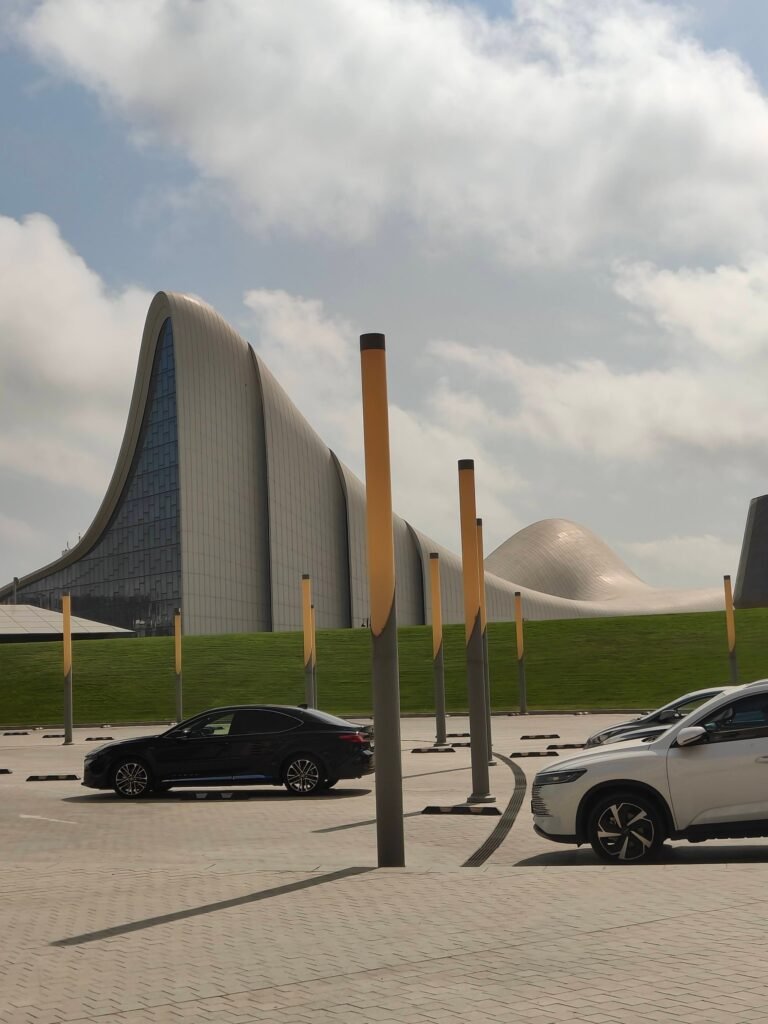
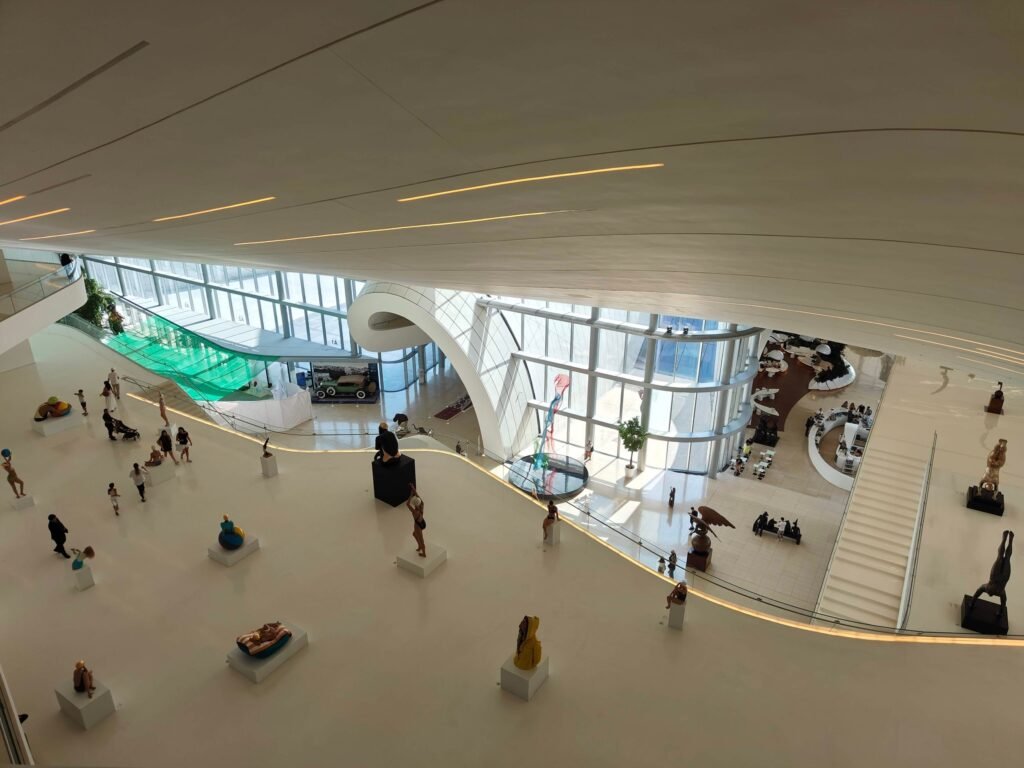
- 23 September: the Heydar Aliyev Center, where the car museum in basement three holds many old Russian cars, then the funicular to Highland Park for sunset over the Caspian and the Flame Towers lit up after dark.
- 24 September: a half day tour to the mud volcanoes and the Gobustan rock drawings, then lunch at a vegan restaurant near Sahil. Afternoon, watched practising formula 1 cars.
- 25 September: a slow morning, the red line to Koroghlu and the H1 bus to the airport.
Two practical notes. Young people in Baku usually understand English and older people mostly do not. Google Translate has no voice option for Azerbaijani, but holding the screen and showing up translation worked.
Baku to Yerevan: a flight and a night train
The flight to Tbilisi left at 4 PM and took about an hour. The immigration officer looked at my US visa and let me through without even asking for my insurance, though I had every paper ready. The airport bus to railway station took my credit card, so I did not need lari.
My train to Yerevan left at 10:40 PM. Google Maps showed only an 8:20 PM departure and the Georgian railway site did not list mine at all, because it was a seasonal train sold through the Armenian railway website. The departure board at the station confirmed it. The train had no air conditioning. The classes are called first, second and third, and I had a lower berth in third, the equivalent of our third AC. The conductor handed out a pillow, two sheets and a towel, and I locked my bag with a luggage chain.
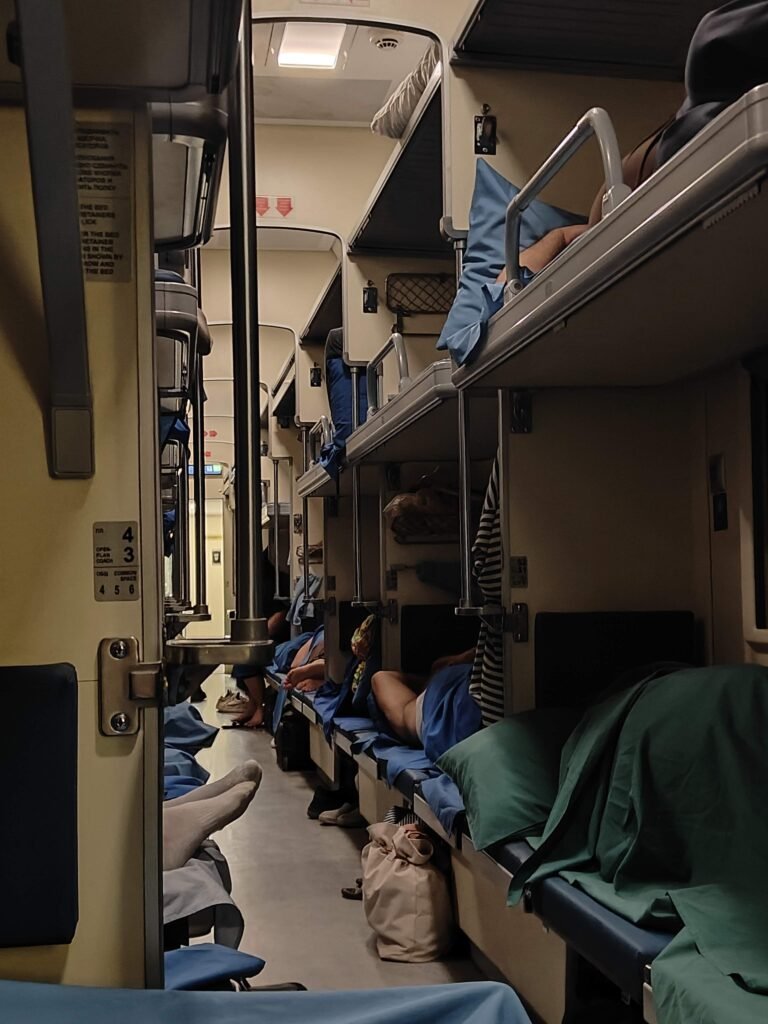
Two border checks followed. Around 12:45 AM everyone got down at the Georgian exit point and queued for exit stamps. Around 2:30 AM, Armenian officers came inside the train with a battery operated passport scanner and finished the checks in the carriage by 3:30. We went back to sleep.
Yerevan, 26 to 29 September
I reached Yerevan in the morning and took the two stop metro ride to my hostel. Areva Hostel & Apartment sits 300 to 400 metres from the Republic Square metro, right by Northern Avenue, and felt more like a home than a hostel, with a kitchen. Check-in was at 1 PM and I arrived at 10, so I waited in the lobby and met a French student who told me where to change money. Soon they checked me in.
- 26 September: Republic Square, the Vernissage craft market, and the Cascade, a long climb, and then escalator for the way down. Mount Ararat was hidden by cloud. Banks were shut on a Saturday, so I changed US$50 into 18,000 dram at a supermarket counter. Lunch was Zhingyalov Hats, a bread stuffed with about 20 herbs, and dinner was at Art Lunch, a buffet where you pay only for what you take.
- 27 September: a tour from 7 AM to 10 PM to Khndzoresk cave village, Tatev Monastery, the Wings of Tatev ropeway and Shaki Waterfall. Mount Ararat showed up sharp and snow capped as we drove along the Turkish border. At Khndzoresk, about 400 steps lead down to a swinging bridge, and the same 400 steps wait on the way back.
- 28 September: Geghard monastery, the Symphony of Stones, Garni temple, the Charents Arch, Lake Sevan at 1,900 metres and Old Dilijan, back in Yerevan around 8 PM. The singing fountain at Republic Square was dancing when I got there.
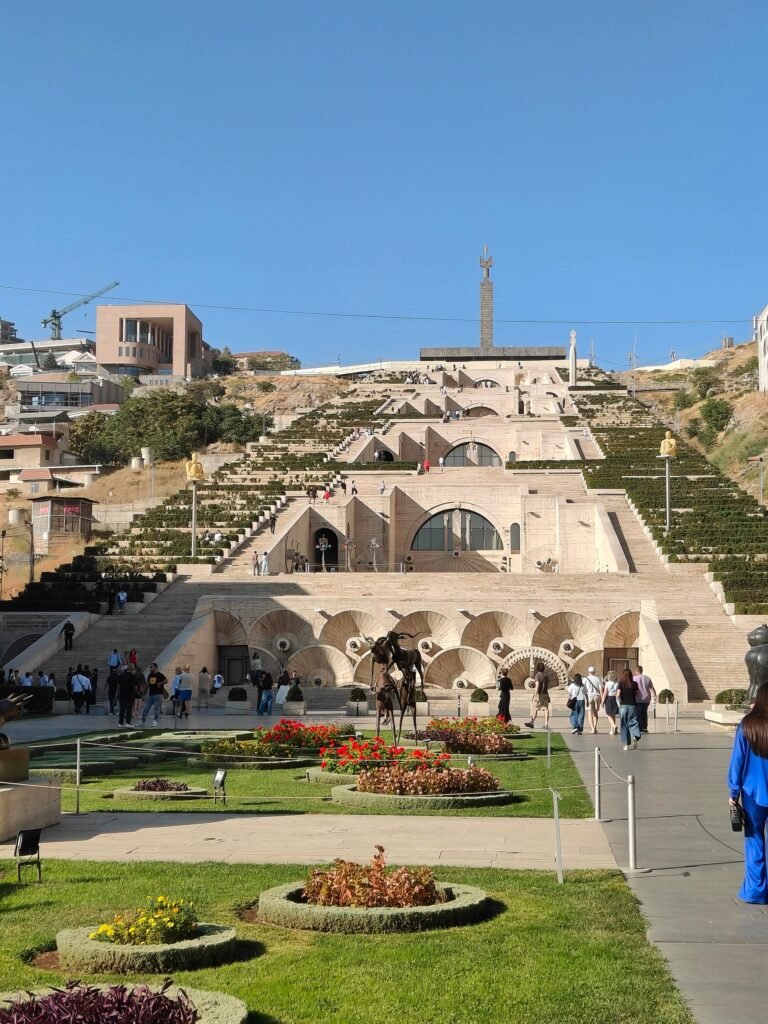
The old city has drinking fountains with spring water that runs all day and night.
Back to Tbilisi, 29 September to 2 October
The 10 AM Hayreniq Tour minibus from Yerevan to Tbilisi. Google Maps sent me through a market parking lot where a guard turned me back, and a big building carrying the company’s name turned out to have nothing to do with the bus. The real stop was a small office a few hundred metres behind it. The bus arrived at 11, an hour late, probably after the 10 AM and 11 AM departures were merged. The Armenian exit was quick. The Georgian officer took a long time and asked to see my visas including the US one, my stay reservation, my flight ticket and my insurance.
In Tbilisi I stayed at Fabrika Hostel, a former factory turned into a very large hostel with a lounge on the ground floor.
- 29 September: rested after reaching hostel late evening.
- 30 September: hot cheese khachapuri from a bakery near the metro, Liberty Square, the Bridge of Peace, the Rike Park ropeway up to the Mother of Georgia statue, and a walk down the steps to Metekhi church.Shavi Lomi for dinner.
- 1 October: the Old Town clock tower early in the morning, then a day tour to Zhinvali Reservoir, Ananuri Fort, Gudauri and Stepantsminda. We changed to 4×4 jeeps for Gergeti Church, and cloud hid the snow mountains. We were back at Liberty Square at 9 PM, and afterwards I found vegetarian cheese khinkali on my third try.
- 2 October: boat shaped adjaruli khachapuri for lunch, leftover dram, manat and lari changed back for US $ at Marjanishvili metro, and bus to the airport for the flight.
On the drive back from Stepantsminda, the guide told me that rents and food prices in Georgia keep rising because tourists and remote workers can pay more, while local salaries have barely moved.
Istanbul and Cappadocia, 2 to 9 October
Istanbul and a flight to Kayseri
I landed around 7:30 PM. Passport control asked no questions, just a look at my visa and a stamp, and I changed US$10 into lira because some Istanbul buses take only cash. It was raining hard, and I waited a long time at a stop on the wrong side of a highway. My bus ran on the highway and my stop was on the service road, which is why none of the buses I waited for were mine. Strangers with Google Translate got me onto a dolmuş minibus.
The next morning I took a double decker to Kadıköy, rode the old T3 tram around the bazaar area. Then the metro to the airport and a two hour flight to Kayseri. The drive to Göreme took 1 hour 25 minutes with drop-offs, and I reached Tuğhan Stone House in Uçhisar around 9 PM.
Cappadocia, 4 and 5 October
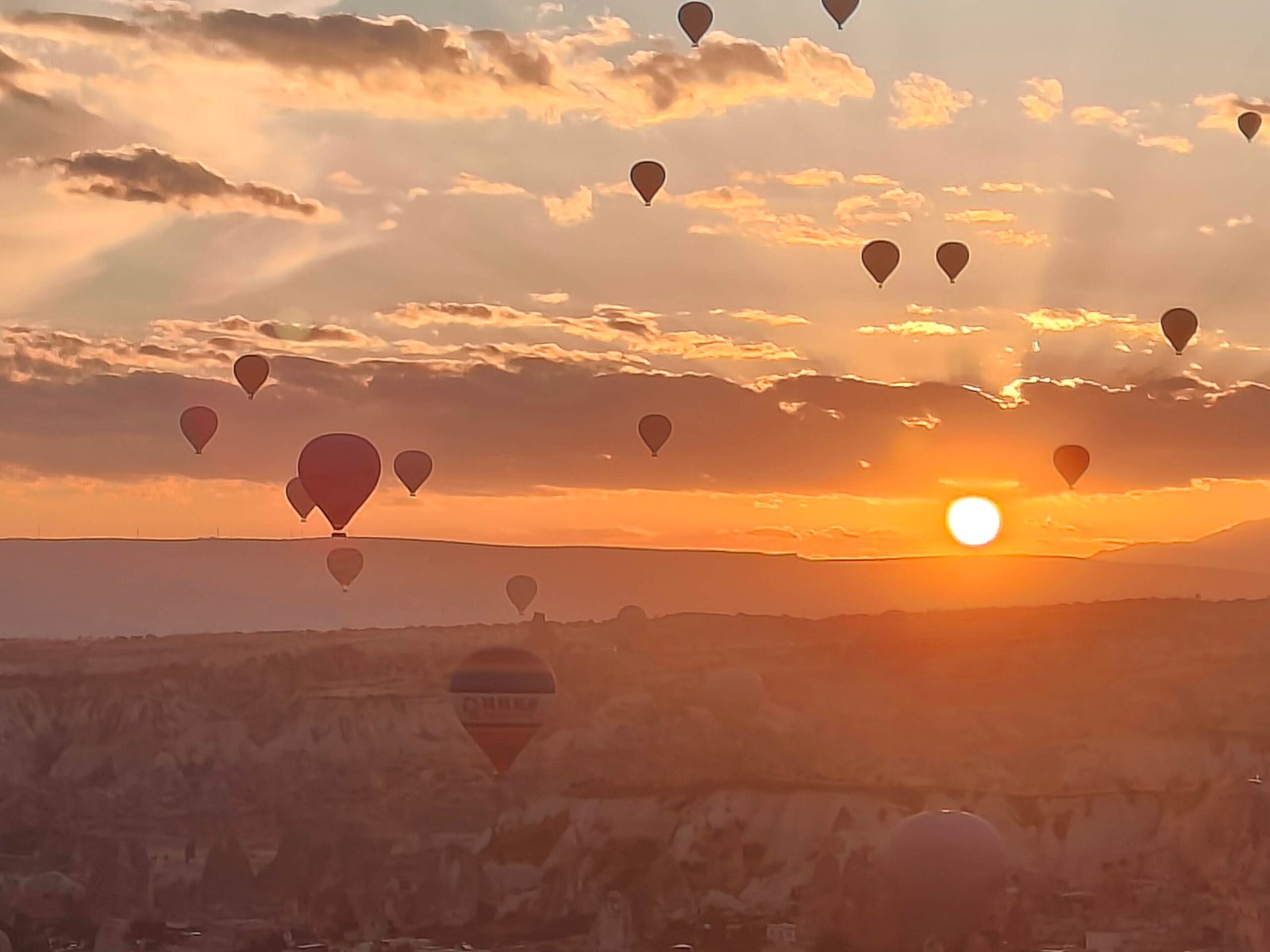
Balloon rides had been cancelled for the three days before I arrived. On 4 October the weather held. I flew from Soğanlı Valley, a bit farther out, with only 10 or 15 balloons in the air. It costed €110. The basket held 15 or 16 people in compartments of fours. It was 6 degrees on the ground and 2 or 3 at about 800 metres, so I wore two layers on my legs and three on top. The flight ran well beyond 45 minutes. The pilot landed us right onto his truck’s trailer, and the crew set out champagne, juice and chocolate strawberries.
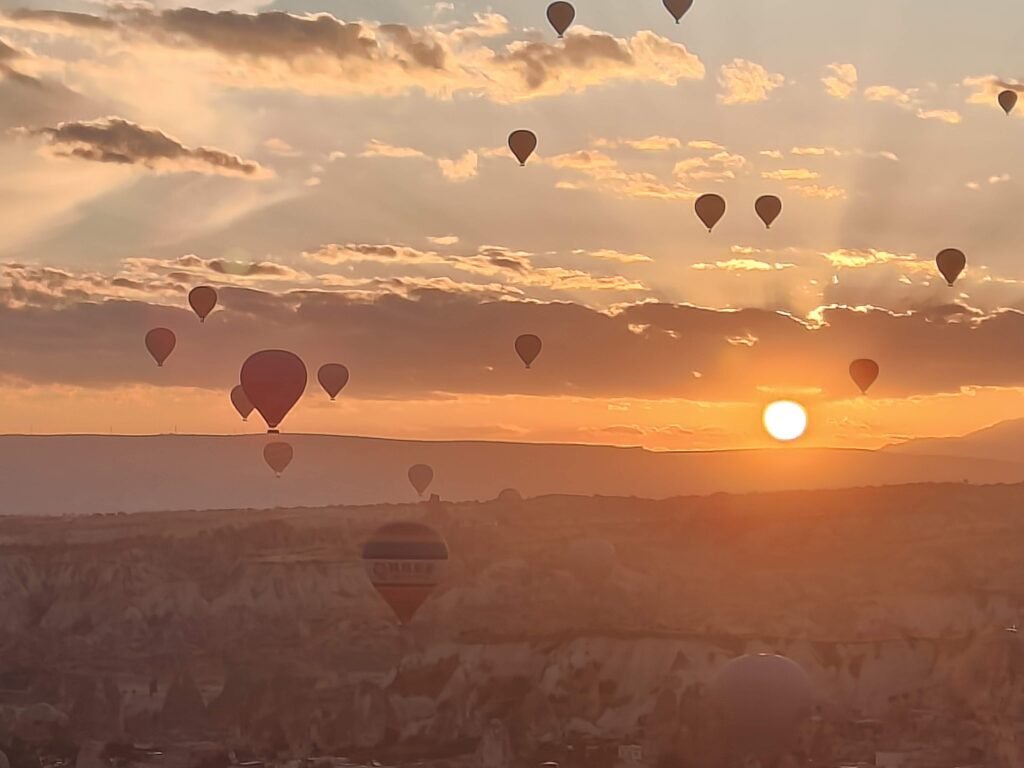
I climbed Uçhisar Castle (about 250 to 300 steps) that afternoon. On 5 October I booked a balloon watching tour, because the forecast said the wind would carry the balloons away from the castle side, which would have given the hotel roof a poor view. About 150 balloons went up at once. A day tour followed: the Göreme viewpoint, an Uçhisar viewpoint, an underground city near Nevşehir (three floors open), Ortahisar and Monk Valley. They dropped me at the Göreme bus stand around 4 PM for the overnight bus.
A night bus and Istanbul again
The bus left around 9 PM and was a pushback Mercedes with a host who served juice and snacks.Heavy traffic pushed the arrival from 7:45 to 9 AM. My hotel near Yenikapı let me leave my bag and freshen up until the room was ready at 10:15.
- 6 October: the Blue Mosque, the Little Hagia Sophia, Hagia Sophia from outside, and the Eminönü to Üsküdar ferry. The Grand Çamlıca Mosque terrace gave a view over the Golden Horn, and I came back under the Bosphorus by train. Topkapı Palace was closed because it was a Tuesday.
- 7 October: baklava from a local Nuri Usta shop near the hotel, a walk down from Istiklal to Galata Tower, Galata Bridge, the Egyptian Market, the Grand Bazaar, the Topkapı gardens and Gülhane Park, then the whirling dervish ceremony at 6:30 PM.
- 8 October: Turkish delight and baklava, vacuum sealed for the flight home. The metro took me to Istanbul Airport, the IndiGo flight landed in Mumbai around 6:30 AM. I was home by 8.
How I paid for everything
Cards worked almost everywhere, and very few places needed cash, mostly excursions. I carried four cards. A small credit card with a limit of only ₹5,000 handled every tap and small purchase. If it was ever hacked, the most I could lose was ₹5,000, and when it ran low I moved money in from my main account. A debit card held ₹25,000, and my normal credit and debit cards stayed for big expenses.
I split my US dollars the same way, between my day bag, a pouch at my hip and a body pouch under my shirt. Here is the method that worked for me. At the airport, convert only about US$10 or 20 into local currency, even if you hold a US$100 note. Ask the counter for 20 dollars in local money and the rest back in dollars. Keep small dollar notes of 5, 10 and 20, and change a bigger amount later at a bank counter or a city exchange shop where the rates are better. Change leftovers back before you fly out.
One more habit that cost nothing: I printed almost every booking and made two copies of my passport page with the visa, one for each bag. I also carried my old passport, because it held my US visa, which I had to show to prove I held a valid US visa. As I understand it, I used that US visa to get my Turkey e-visa. My earlier guide to what a US visa opens up for Indian passport holders is here. Visa rules for Indians change, so check each country’s official site before you book.
Small things that surprised me
- Toilets are paid almost everywhere in Georgia, Armenia and Turkey: 1 lari, 100 dram, or 10 to 20 lira. Official ones at stations usually take a card, and private ones want cash in a money box.
- Baku tap water is not safe to drink, so you have to buy it. Armenian tap water is fine. Georgian tap water is fine too. In Turkey you buy water, and it costs about what it does in India.
- Cheese and dairy are everywhere in all three Caucasus countries and in Turkey, which is a relief for a vegetarian and a risk for a sensitive stomach. I used ORS for about three days and ate lightly.
- Packed restaurant food does not last. My Zhingyalov Hats became a wet lump within hours. Pack supermarket food that is meant to keep for a couple of days instead.
- Almost every hostel has a laundry option, and the machines are big. I washed a small load by hand in the sink with dry washing powder, and everything dried quickly.
What went wrong, and what I did about it
- Hayreniq Tour: a wrong building and a guard in a parking lot used up my half hour buffer, and the bus still came an hour late. Keep a buffer.
- The seasonal train missing from Google Maps: I checked the station board.
- The Istanbul highway stop: buses on the highway skip the service road stop. I changed my plan and rode a minibus.
- Ankara: our night bus left from a different platform than the one we arrived at. Get down with someone who speaks Turkish, or note the platform number before you leave the bus.
- The Cappadocia shared van waited 45 minutes. I called the coordinator, and I think that helped them move us.
- The IndiGo flight home was three hours late. Nothing to do but stay calm and wait.
If I did this trip again
- Fly into Baku first and work west, so you never pay the expensive Georgia to Azerbaijan fare.
- Keep a half hour buffer on every connection. I used mine up completely at least once.
- Carry some cash for dolmuş minibuses, jeeps and toilets, but change only US$10 to 20 at an airport.
- Pick the Soğanlı Valley for a balloon ride if the price in the main Göreme area puts you off.
- Do not pack restaurant food for later in the day.
Frequently asked questions
Which order should I visit Azerbaijan, Georgia and Armenia in?
Azerbaijan first, then Georgia, then Armenia, as I did. Flights from Georgia back to Azerbaijan are much more expensive, and the land border is hard to use.
Can I do this trip on cards only?
Almost. I used about US$225 in cash across four countries. Cash was needed for 4×4 rides at the mud volcanoes and in Stepantsminda, for dolmuş minibuses in Istanbul, and for private toilets.
How much luggage do I need for 18 days?
A 40 litre backpack of about 7 kg plus a foldable 2 kg bag. Quick dry clothes and vacuum bags made it work. As I understand it, airlines usually allow a backpack of up to 10 kg, though some allow only 7 or 8, so a 7 kg bag fits almost anywhere.
Is tap water safe in each country?
Baku: no. Armenia: yes. Georgia: yes. Turkey: buy bottled water.
Detailed guides from this trip
- Cappadocia hot air balloon price: Soğanlı vs Göreme
- Istanbulkart vs credit card: the maths from my trip
- Tbilisi to Yerevan night train: border check and tickets
- Vegetarian food in Georgia, Armenia, Azerbaijan and Turkey
- Baku to Tbilisi: why I flew instead of crossing the border
- Tatev day trip from Yerevan: Khndzoresk and the ropeway
- How I protect my money abroad: the spare phone and ₹5,000 card


Pingback: Cappadocia Hot Air Balloon Price: €100 vs €300
Pingback: Baku to Tbilisi Flight or Border? Why I Flew
Pingback: Visa-Free Countries With a US Visa (Indian Passport)
Pingback: Protect Your Money Abroad: Spare Phone, ₹5,000 Card
Pingback: Tatev Day Trip From Yerevan: Khndzoresk & Ropeway
Pingback: Vegetarian Food in Georgia, Armenia & Turkey: My Meals
Pingback: Tbilisi to Yerevan Night Train: Border Check & Tickets
Pingback: Istanbulkart vs Credit Card: The Maths From My Trip