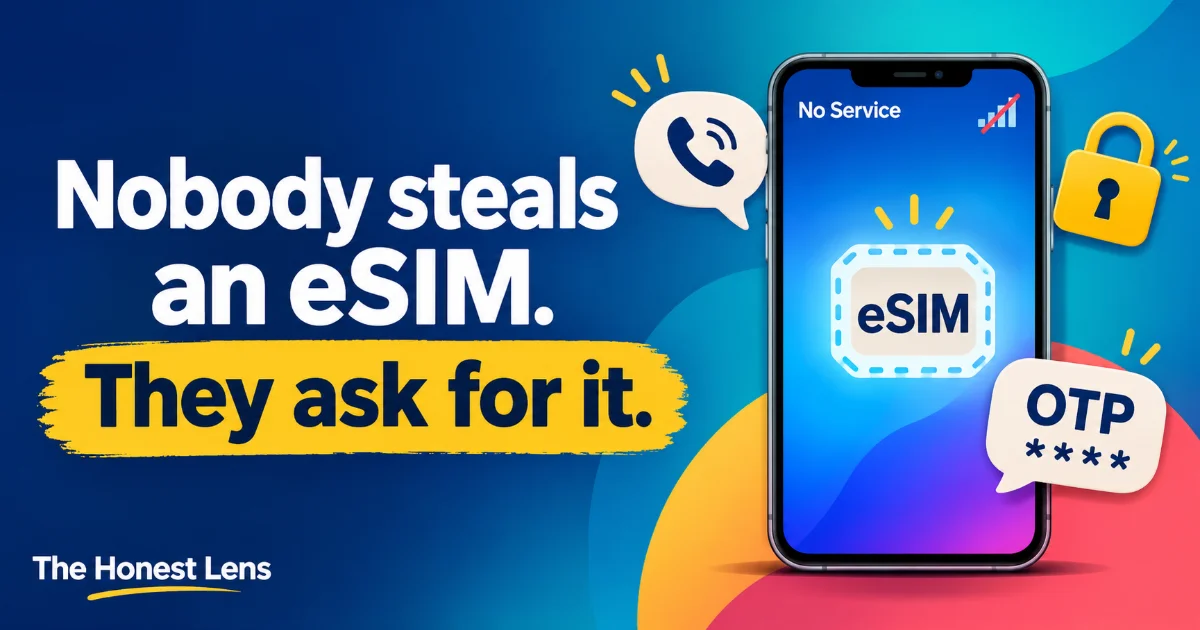
eSIM Scam India: A Thief Cannot Take Your eSIM, So Scammers Ask You for It
The eSIM scam India’s cybercrime authorities keep warning about does not need your phone. It needs you.
With a physical SIM, a thief can take your phone, pull the SIM from the tray and put it in another handset. Your WhatsApp, email and bank OTPs then arrive on their phone. An eSIM has no tray, so that trick is closed. The scammers have moved to the next easiest thing, which is asking you to move the number yourself.
I think the phone number is a poor key for everything we own, and these scams are what happens when someone can talk that key out of your hands.
I haven’t tested any of this myself. It comes from government warnings and police statements, and the few links are at the end.
The 30 second version
- An eSIM can’t be taken out of a stolen phone, so the stolen SIM trick from my SIM card lock post doesn’t work on it.
- The scam now arrives as a call, a link or a code that gets you to move your own number.
- The sign is a sudden “No Service”. OTPs reach the fraudster within minutes.
- Never act on an eSIM or SIM request you didn’t start, and take SMS OTP off email and banking where you can.
Table of Contents
What changes with an eSIM
An eSIM is a SIM built into the phone. You get it by scanning a QR code or entering a code from your operator, so there is no card to steal. As I understand it, moving one to another phone needs the operator’s approval and access to your account or your unlocked handset. A thief holding your locked phone has neither.
So the attack has to come through you or through the operator. That is what the reports describe.
eSIM scam India: how the call works
The police and I4C accounts follow the same few steps:
- A call, SMS or WhatsApp message arrives from someone posing as your telecom operator.
- They offer a 4G to 5G upgrade, or say your SIM must be converted to an eSIM.
- You are asked to agree, share a code or tap a link.
- Your number goes live on a device they hold, and your phone shows “No Service”.
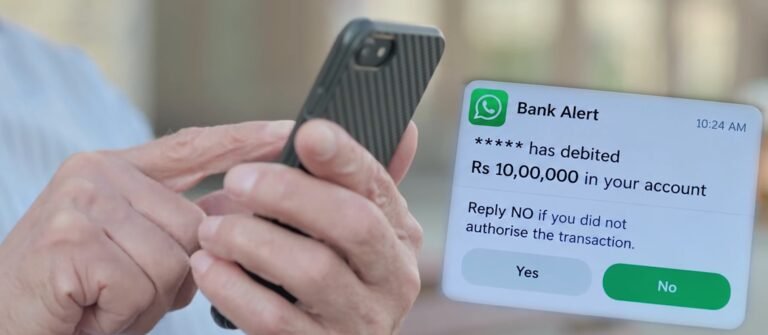
- Your OTPs now reach them, and the money moves out to mule accounts.
In August 2026, Delhi Police arrested two men from West Bengal in a module linked to 124 complaints on the national cybercrime portal. The case began when a Delhi resident reported about ₹40 lakh gone from his bank accounts after an alleged eSIM takeover. Police say the accused posed as telecom employees and wore operator-branded clothes on video calls to look genuine. These are allegations, and the investigation is still on.
I4C, the Home Ministry’s cybercrime coordination centre, had put out a warning about the same pattern in August 2025.
Five ways it reaches you
- The upgrade call. Someone claiming to be from the operator offers a 5G upgrade or an eSIM conversion.
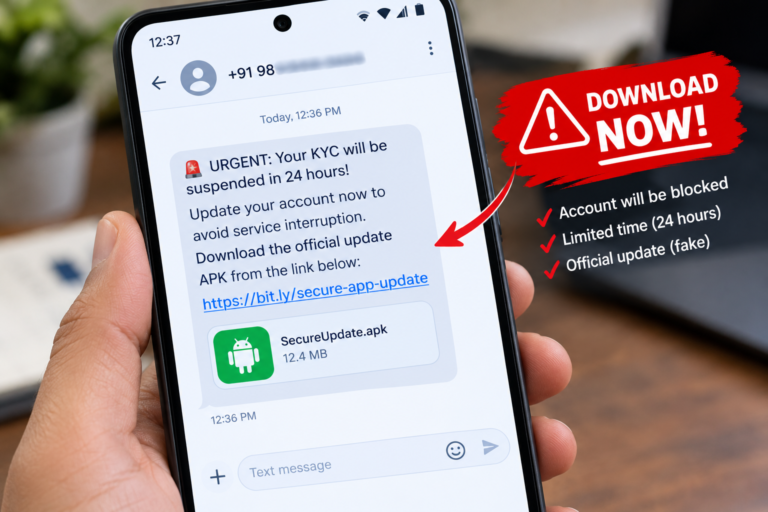
- The link or code. You get an activation link or are asked to read out a code. I4C’s warning describes a link that moves the number once you tap it.
- The reverse call. A caller posing as a bank executive says your eSIM must be converted back to a physical SIM for security.
- The KYC or TRAI threat. Your number will be switched off unless you confirm Aadhaar details or an OTP.
- The request you refused. In a Delhi case reported in May 2026, a man turned down an eSIM offer on a call. His network stopped soon after, and next day a telecom store showed an eSIM already issued on his number and his Aadhaar locked. The report doesn’t say how it was issued.
What I could not confirm
- How a link alone moves a number. I4C says tapping the link converts the SIM. I couldn’t verify the technical steps behind that, so I treat it as what the authorities report, not as a method I can explain.
- Insiders and hacked accounts. I’ve seen claims about operator staff being bribed, or fraudsters logging in to a victim’s operator account. I found no confirmed Indian case of either. I would still protect those logins, because they are other doors to your number.
- What each operator checks. I don’t know what verification Airtel, Jio, Vi or BSNL run before approving an eSIM. Ask yours.
Why it works
The call sounds routine. Operators do push eSIM and 5G, so the offer is believable, and the caller needs you to say yes only once. Then the delay helps them. A sudden “No Service” looks like a network glitch, so people wait. The OTPs don’t wait.
What I would do before it happens
- Treat any eSIM or SIM request you didn’t start as a scam. Hang up, and call back on the number in your operator’s app or website, never the one the caller gave.
- Start any SIM or eSIM change yourself, in the operator’s app or at its store. Never read out a code, QR or OTP to a caller.
- Take SMS OTP off the accounts that matter. Use an authenticator app or a passkey for your email, because email resets everything else.
- Switch on two-step verification in WhatsApp. It adds a PIN, so someone re-registering your number can’t get in with the SMS code alone.
- Save your bank’s block number offline, and set transaction alerts.
- Report such calls on Sanchar Saathi (the Chakshu option), even if you hung up.
If your phone shows No Service
Don’t wait to see if it comes back. The same steps work if you already shared a code.
- From another phone or on Wi-Fi, call your bank and block UPI, net banking and cards. I would call the bank first, because that stops the money, and the operator takes longer to fix.
- Call 1930 and file a complaint at cybercrime.gov.in.
- Call your operator from another phone and ask them to block the eSIM and restore your number.
- Change your email password from a device where you are still signed in, then the other accounts, and sign out all other devices.
- Once the number is yours again, check WhatsApp and switch on two-step verification.
- Tell family and colleagues that messages from your number may not be you.
- Keep the call logs, messages and numbers for the complaint.
Message for the family WhatsApp group
Family alert: do not accept any SIM upgrade or eSIM request that someone calls or messages you about. Start it yourself in the operator’s app or store, or not at all. Never read out a code or OTP to a caller. If your phone suddenly shows No Service, call your bank and 1930 straight away.
FAQ
Is an eSIM safer than a physical SIM in India?
Against a stolen phone, yes. It can’t be taken out and put in another handset. Against a caller who talks you into moving your number, it makes no difference.
Can a thief use my eSIM if my phone is stolen?
As I understand it, moving the eSIM needs your operator’s approval and access to your account or your unlocked phone. Keep a strong screen lock, and follow my lost phone checklist from the first minute.
What does No Service mean after a call about eSIM?
Treat it as a possible number takeover until you know otherwise. It can also be a network fault, but you can’t tell from the phone, and the OTPs move in minutes.
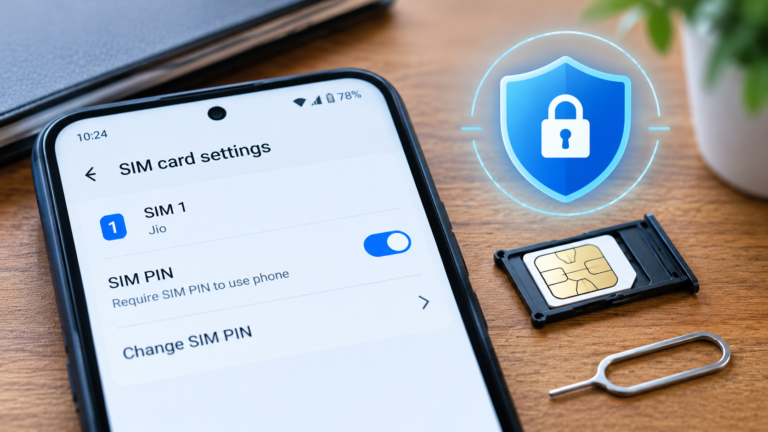
Does a SIM PIN stop an eSIM scam?
No. A SIM PIN stops a physical SIM from working in another phone. It doesn’t stop someone persuading you to move your number. I explain the limits in my SIM card lock post.
My takeaway
If I had one afternoon, I would take SMS OTP off my email, switch on WhatsApp two-step verification and save my bank’s block number. I wouldn’t give up eSIM over this. The rule is the same for any SIM: nobody who rings you gets to move your number.
To report fraud, call 1930 or use cybercrime.gov.in. Suspicious calls can be reported on Sanchar Saathi. The Delhi Police case is in the PTI report.
Want a daily three minute habit? BeCyberSmart.in runs a free scam-awareness quiz in English, Hindi, Marathi and Tamil.
Last reviewed: November 2026. Helplines, operator rules and police advisories change, so check the current version before you act.


2 Comments
Comments are closed.